
Ankle Weights vs Weighted Vests: Where to Put the Load
Ankle weights load the limb, a weighted vest loads the trunk. They train different things and carry different joint risk - here is which one suits your training.



Both add resistance to movement you are already doing. Where they put that resistance changes what you train and what you risk, and the two are not interchangeable despite being sold to the same person.
We built this comparison from Amazon Australia's own listings: current AU pricing, rating and review volume, plus a read-through of recent verified reviews looking for complaint patterns rather than the star average alone. See how we test for the full method.
The mechanical difference
A weighted vest sits on your trunk, near your centre of mass. Every step, squat and push-up carries more load, your posture barely changes, and the extra weight moves the way your body already moves. An ankle weight sits at the far end of a long lever. A 1 kg strap at the ankle produces far more torque at the hip and knee than 1 kg on your chest, which is exactly why it works for isolation movements like kickbacks and leg raises — and exactly why it is the riskier of the two for high-impact use.
Use ankle weights for isolation, not for running
Glute and hip work is where ankle weights are hard to replace. Side-lying abduction, standing kickbacks, lying leg curls, the rehab circuits a physio prescribes after a knee injury: all of these need load at the ankle and nowhere else. What they are not good for is adding resistance to running or jumping. The repeated torque at the knee during impact is a different proposition from a controlled kickback, and this is the use case most sports-medicine guidance warns against.
Use a vest for everything that is already a whole-body movement
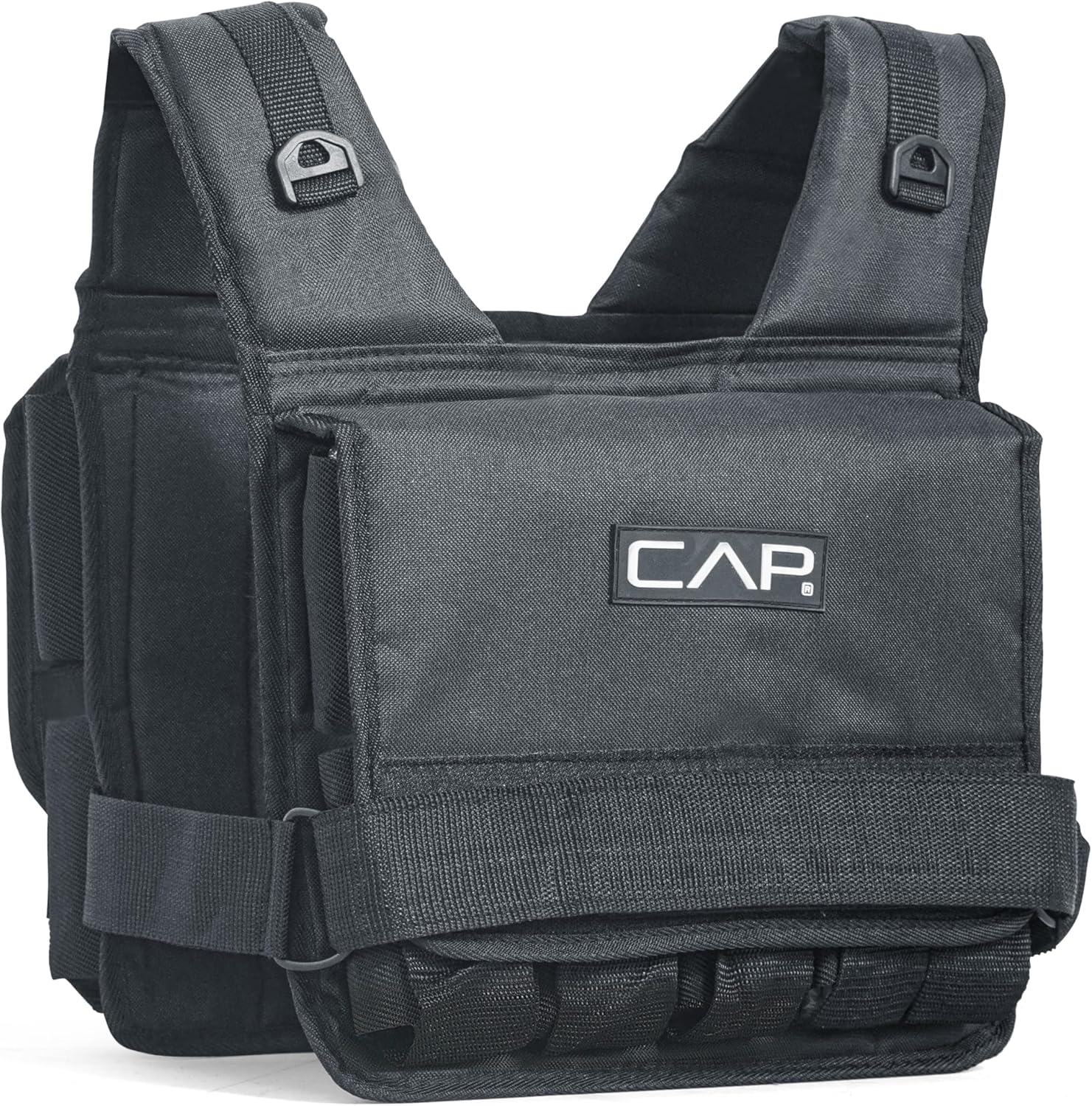
Walking, stairs, push-ups, pull-ups, bodyweight circuits. The vest adds load without changing your mechanics, which is its whole advantage. The CAP Barbell is the one we would point most people at — a deep review base is the deepest evidence in that group — with the ProsourceFit as the cheaper way in.
They are not the same money
A fixed ankle pair is $20.39. A vest starts around $36 and runs past $100. If budget is the constraint and your training is lower-body isolation work, the ankle weights are not a compromise, they are the correct tool. If you want one purchase that makes your existing routine harder across the board, the vest is.
What we are not telling you
We have not measured joint loading on anybody, and the torque argument above is standard biomechanics rather than something we tested. If you have a knee or hip history, that is a conversation for a physio, not a buying guide. The full groups are in the ankle weights comparison and the weighted vests comparison.