
Ceramic vs. Stainless Steel Cat Water Fountains: Does Material Matter
Ceramic vs. stainless-steel/plastic cat water fountains - what actually changes with material, including chin-acne and cleaning considerations, using real Amazon AU listings.

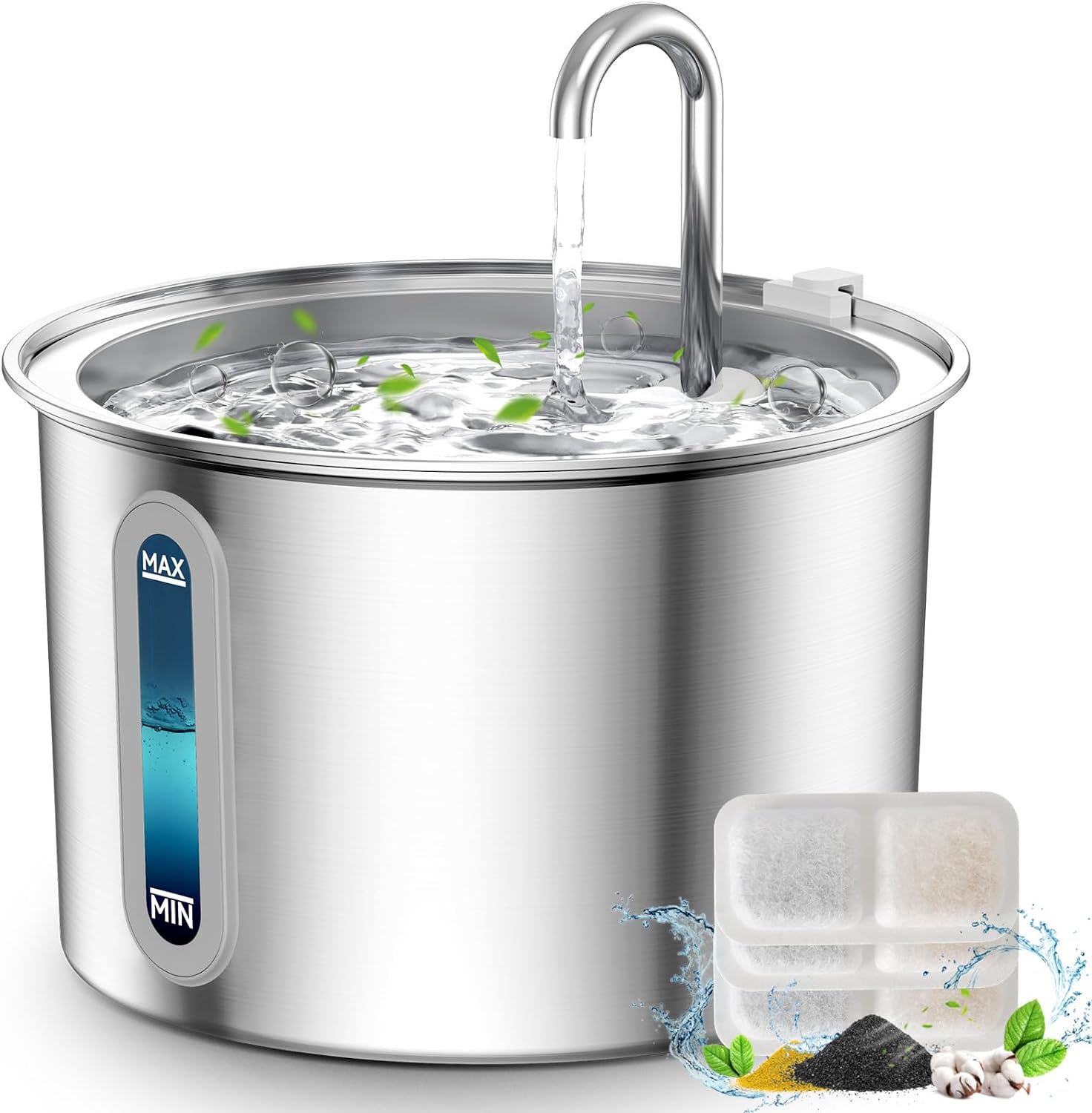
In short: stainless steel and plastic fountains (like the oneisall in our main comparison) are cheaper and lighter; a ceramic fountain like the DOOOB costs more but is the material several manufacturers and vets commonly recommend for cats prone to chin acne, since it doesn't develop the fine surface scratches that trap bacteria the way some plastics can.
Cat water fountains solve the same problem - encouraging cats to drink more via moving water - regardless of material. Where they differ is what the bowl itself is made of, and that has real, non-cosmetic consequences for cleaning and, for some cats, skin health.
What to check before choosing by material
- Chin acne history - if your cat has had chin acne or you've read that plastic bowls can be a contributing factor, ceramic (or stainless steel, to a lesser extent) is the safer material choice; this is a commonly cited reason for switching away from plastic, not a claim we're independently verifying medically.
- Weight and breakage risk - ceramic is heavier (harder for a cat to tip over) but can chip or crack if dropped; stainless steel and plastic don't.
- Cleaning routine - ceramic surfaces are non-porous and don't scratch the way some plastics do over time, which several DOOOB reviewers specifically called out as easier to keep genuinely clean.
- Price - ceramic fountains generally sit at a premium versus comparable-capacity stainless steel or plastic ones.
- Filter replacement cost - independent of material, check how often the specific model needs filter changes and the ongoing cost, since that's a recurring expense either way.
Why some owners switch to ceramic specifically
The DOOOB's own listing states its ceramic material is "naturally skin friendly...especially those with chin acne or other sensitive skin issues" and easier to clean than plastic. That's the manufacturer's framing rather than an independently verified clinical claim, but it reflects a widely repeated reason pet owners cite for choosing ceramic over plastic fountains specifically.
What doesn't change with material
Both ceramic and stainless-steel/plastic fountains in our comparison use a similar recirculating pump and filtration approach (carbon + sponge). Noise level, capacity and app/sensor features are a function of the specific model, not the bowl material itself - don't assume "ceramic" alone tells you anything about pump noise or capacity.
Frequently asked questions
Is ceramic actually better for cats with chin acne? It's the material most commonly recommended for that specific concern by pet owners and some retailers, largely because it doesn't develop the micro-scratches that can happen with plastic over time. We haven't independently verified this with a veterinary source - if your cat has a diagnosed or recurring chin acne issue, it's worth asking your vet directly.
Does ceramic hold water temperature or taste differently? Some owners report ceramic keeps water tasting more neutral than plastic, similar to the reasoning for ceramic pet food bowls, but this isn't something we've measured ourselves.
Is a heavier ceramic fountain harder to clean than a lighter one? Not based on the reviews we read - the ceramic surface itself is generally described as easier to wipe clean; the weight only matters for moving/carrying it to the sink.
Prices, ratings, and stock status are snapshots from Amazon Australia at the time this guide was last updated - check the date next to each price before you buy, since Amazon pricing changes often.